4 hr
Kalbarri Skywalk Sunset & Stargazing Experience
Watch the sun set over Murchison River Gorge, then discover the Milky Way from Western Australia's darkest skies
Reserve
Two hundred million stars above red gorge country, beyond the reach of coastal light
Hand-picked by our editors — only the best 4 astronomy experiences from 11 reviewed
Verified partners for Kalbarri Stargazing tours, free cancellation where available, and instant confirmation on every booking.
4 hr
Watch the sun set over Murchison River Gorge, then discover the Milky Way from Western Australia's darkest skies
Reserve
3 hr
Witness the Milky Way and southern constellations from one of Australia's darkest sky locations
Reserve
1 hr 30 min
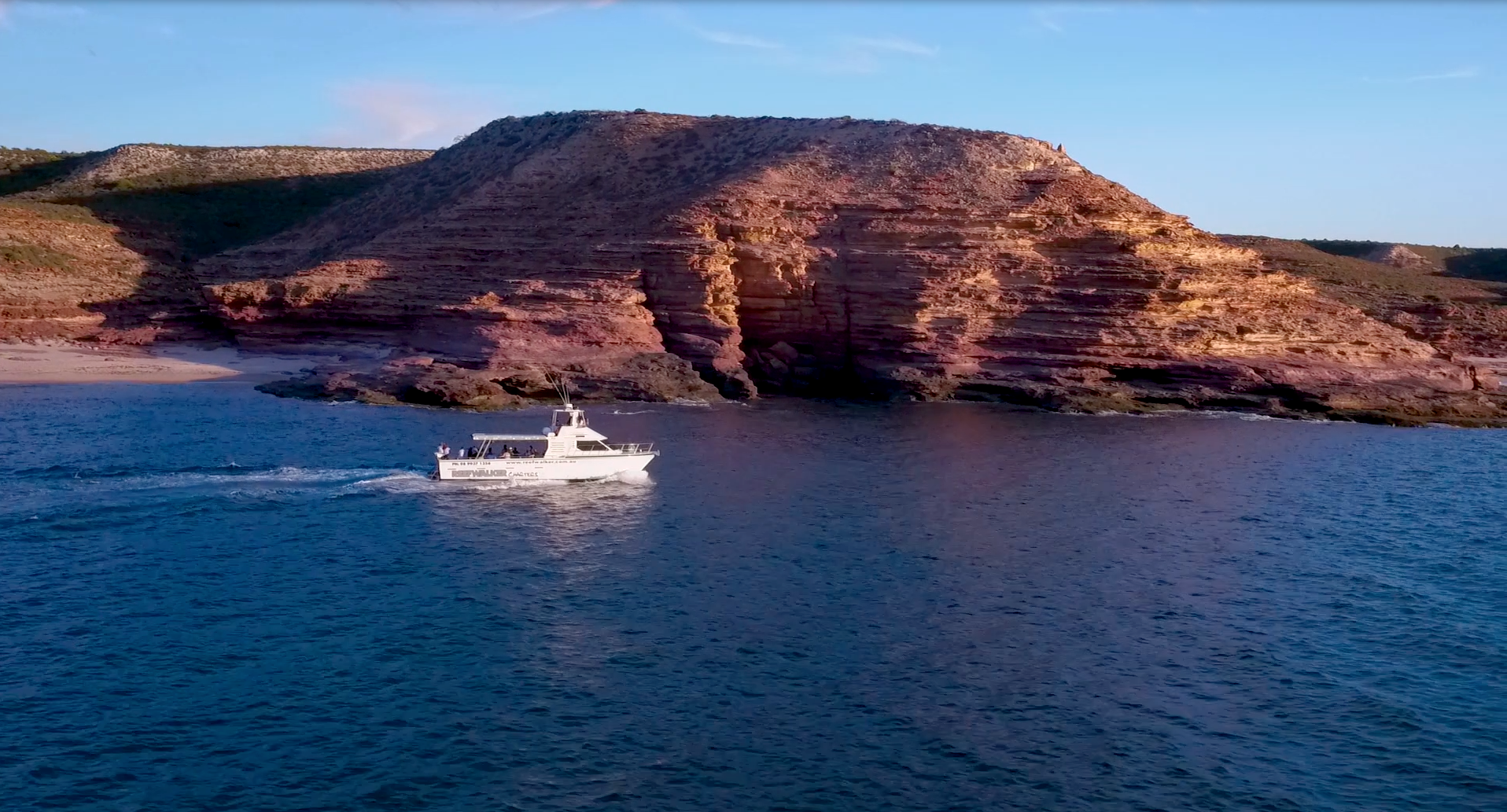
Glide past towering cliffs and sculpted rock formations as the sun melts into the Indian Ocean.
ReservePrices from verified partners. Availability updates in real time at checkout. Free cancellation policies apply where shown.
Every Kalbarri Stargazing tour side-by-side — duration, what's included, how you redeem.
| Experience | Duration | Rating | Pickup | Guide | Small group | Free cancel. | Price | |
|---|---|---|---|---|---|---|---|---|
|
Standard Entry Most popular
Kalbarri Skywalk Sunset & Stargazing Experience
|
4 hr | ★ 4.7 | ✓ | ✓ | ✓ | ✓ | €113 | Book → |
|
Standard Entry
Kalbarri Night Sky Adventure
|
3 hr | ★ 4.6 | — | — | — | ✓ | €104 | Book → |
|
Standard Entry
Kalbarri Coastal Sunset Cruise
|
1 hr 30 min | ★ 4.8 | — | — | — | ✓ | €34 | Book → |
All prices from verified partners. Availability and exact terms confirmed at checkout.
They complement each other; most visitors who do both find the organized kalbarri stargazing tour more educational for night sky interpretation, while independent daytime visits offer better access to the iron lattice observation deck architecture.
| Feature | Top pick kalbarri stargazing tour | Daytime Sightseeing |
|---|---|---|
Time of day |
Evening to night | 06:00–10:00 (recommended) |
Included transport |
Provided 4WD vehicle | Personal vehicle |
Guided astronomy access |
Expert-led constellations | None |
Access to telescopes |
High-powered optical equipment | None |
Photography assistance |
Low-light setup guidance | Self-directed |
Sunset views |
Direct horizon observation | Variable based on arrival |
Overall cost |
Premium tour pricing | 17 AUD (conservation fee) |
| See tickets → |
Verdict: Choose the kalbarri stargazing tour tours for deep-space astronomy and navigation support, or select the self-driven option for flexible exploration of the rugged Kalbarri National Park landmarks, noting that kalbarri stargazing tour tickets must be booked in advance to secure astronomer availability.
Choose your ticket, select your date, and reserve in under two minutes. Secure checkout handled by our verified partner.
Instant confirmation by email, with a mobile voucher you can save offline. No printing, no queuing at a collection desk.
Arrive at the entrance, show your voucher on your phone, and walk in. Most tickets include priority or skip-the-line access.
Practical details for Kalbarri Stargazing tickets straight from our verified partners — hours, access, rules, and how to get there.
West Loop Lookout Road
Main platform entrance
Open in Google MapsFollow Ajana-Kalbarri Road then turn onto the unsealed section toward the West Loop.
Sturdy walking shoes are recommended for the Kalbarri Skywalk terrain. Prepare for temperature drops during a night-time kalbarri stargazing tour.
There are no security checkpoints, but visitors should carry only essential gear. Keep items compact for your kalbarri stargazing tour experience.
Tripods are permitted for those capturing the cosmos during a kalbarri stargazing tour. Respect other visitors while setting up your equipment.
The primary paths and the Kalbarri Skywalk feature flat, hardened surfaces. Assistance may be needed for some paths surrounding the Kalbarri Skywalk during a dark kalbarri stargazing tour.
Mobile reception can be unreliable in the national park. Download maps before leaving your hotel for a kalbarri stargazing tour.
The site is suitable for all ages, though children require supervision near the edge. A kalbarri stargazing tour provides a great educational opportunity for older children.
No food or drink facilities are located at the Kalbarri Skywalk structure itself. Carry sufficient water when participating in a kalbarri stargazing tour.
Pets are not permitted within Kalbarri National Park. Please make arrangements for animals before your visit.
As the Kalbarri Skywalk is part of a national park, all flora and fauna are protected. Follow Leave No Trace principles during your kalbarri stargazing tour.
Best time to go, insider tips, nearby landmarks, and the cancellation fine print — flip through to skim what matters to you.
How crowds, weather, and events shift across the year.
Cool, clear nights are perfect for a kalbarri stargazing tour. Temperatures average 15°C to 20°C.
Small details that turn a good visit into a great one.
Monitor Bureau of Meteorology reports for high wind. Strong gusts can affect your kalbarri stargazing tour comfort.
Temperatures in the gorge plummet after sunset. Bring extra warmth even if the day is hot.
Use a red-light torch to preserve night vision during your kalbarri stargazing tour.
Non-bookable sights within a short walk — free to visit, easy to pair.
A natural rock arch overlooking the Murchison River. This landmark is a short drive from the Kalbarri Skywalk.
Offers a dramatic view of the gorge with steep cliff faces.
Flexible, no hidden fees.
The conservation fee of 17 AUD per vehicle per day is non-refundable. Please ensure your travel plans are finalized before arrival at the Kalbarri Skywalk.
Hand-picked options within walking distance — pick a district for vibe, or a specific hotel for convenience.
Various hotels and apartments located in the nearby coastal town.
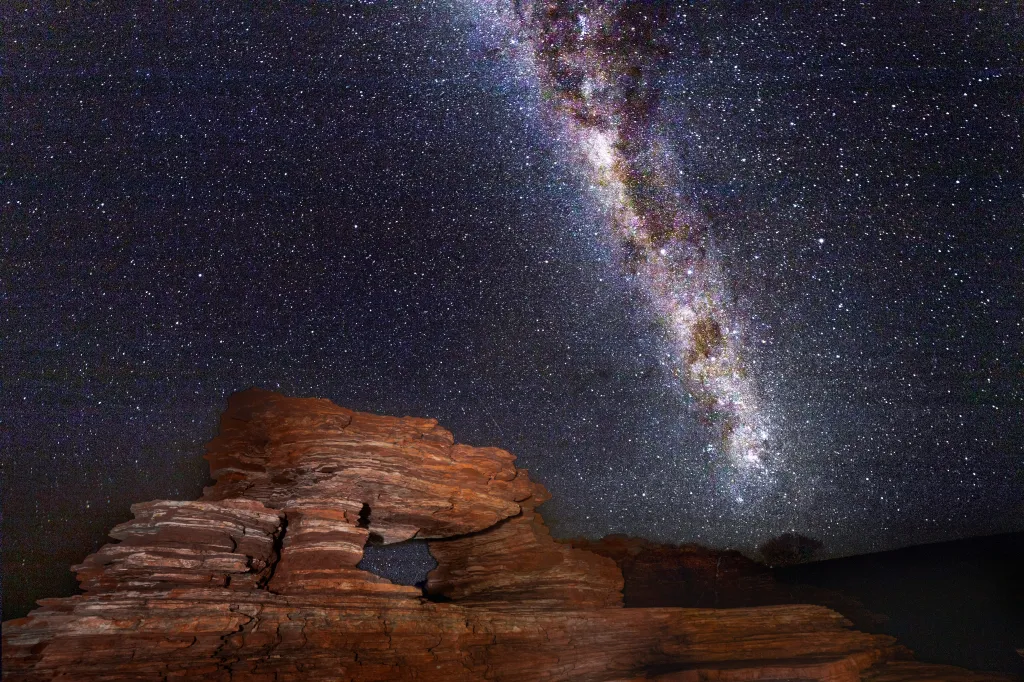
Kalbarri National Park holds Bortle Class 2 darkness, a designation shared by fewer than eight percent of surveyed sites across the Australian continent.
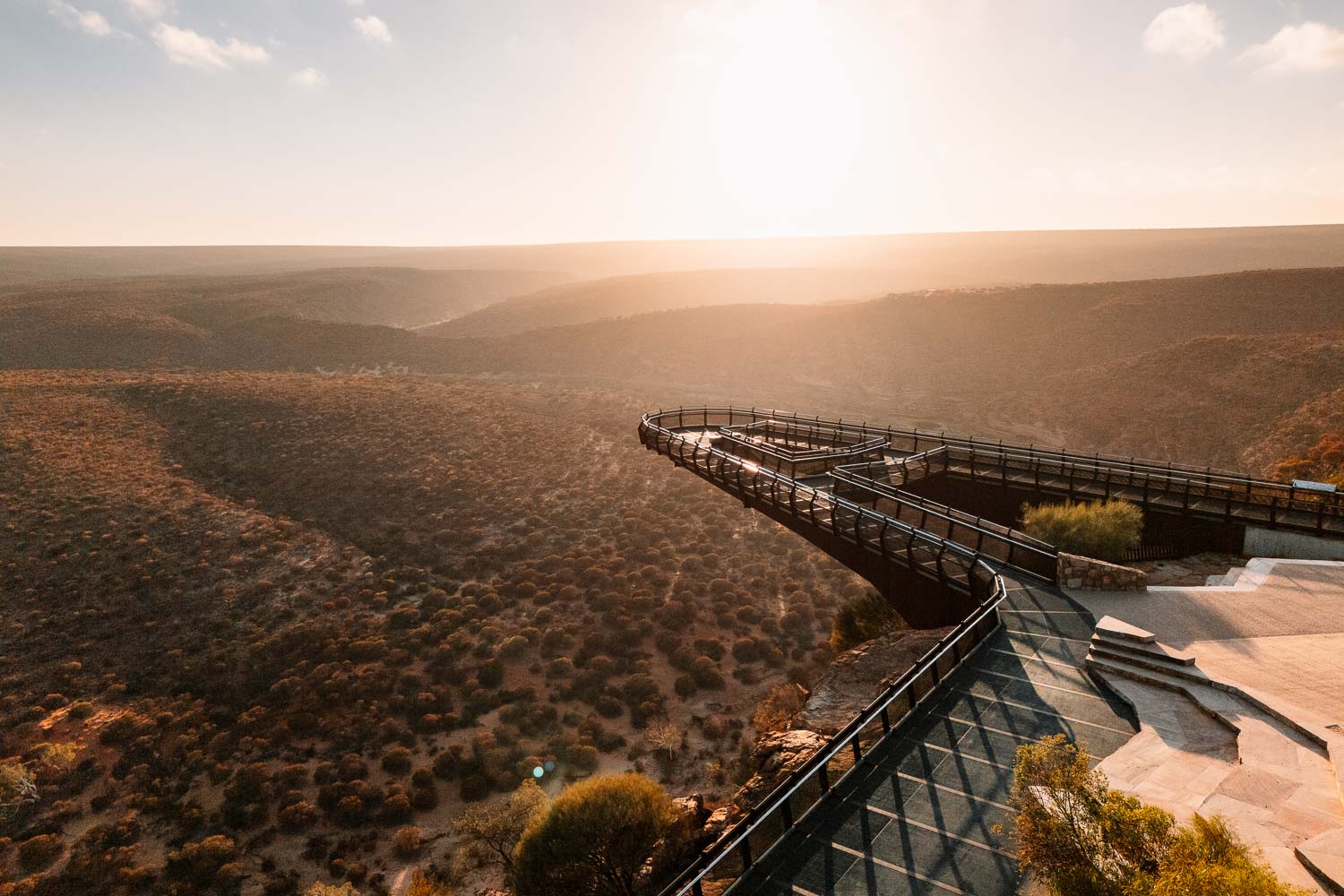
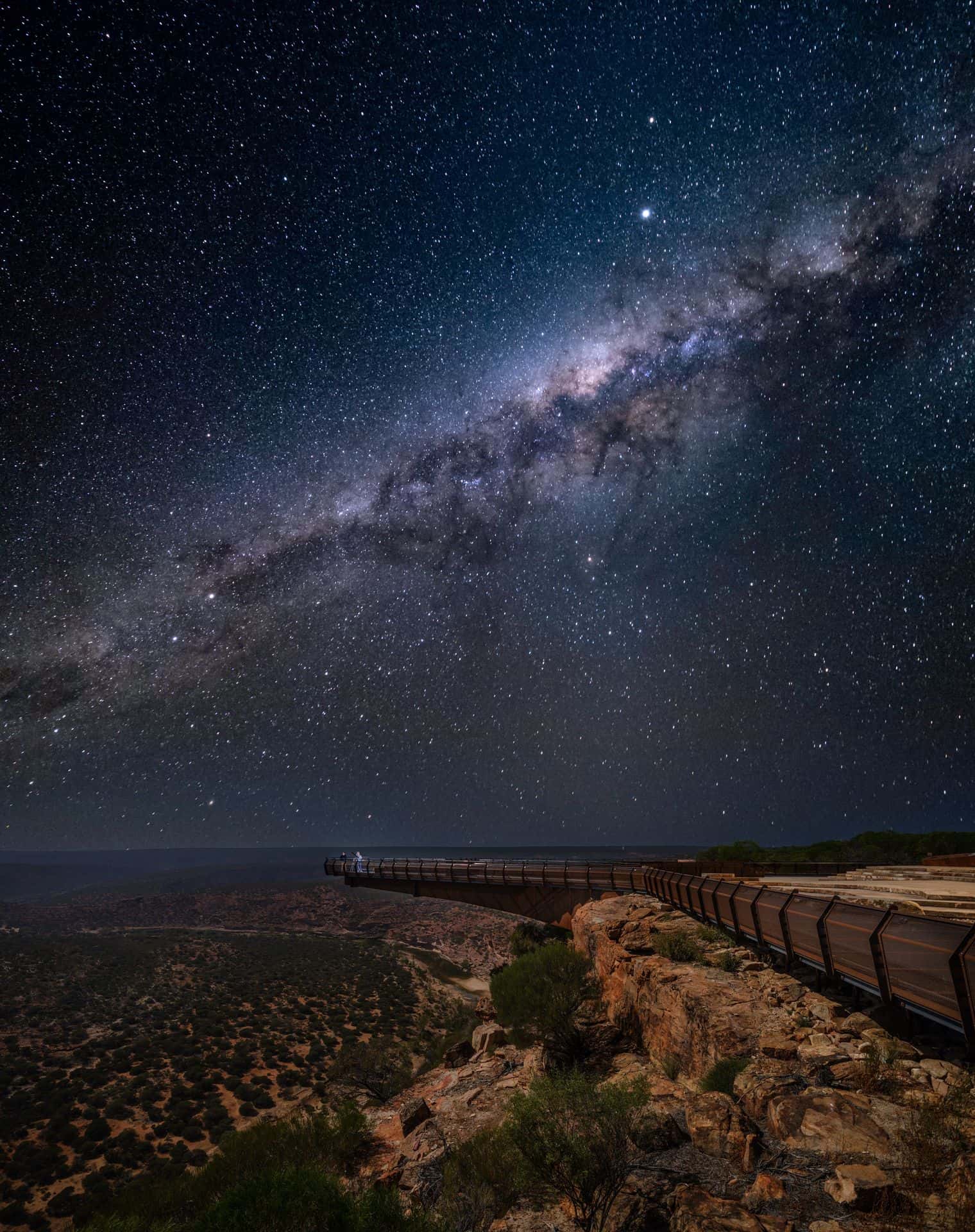
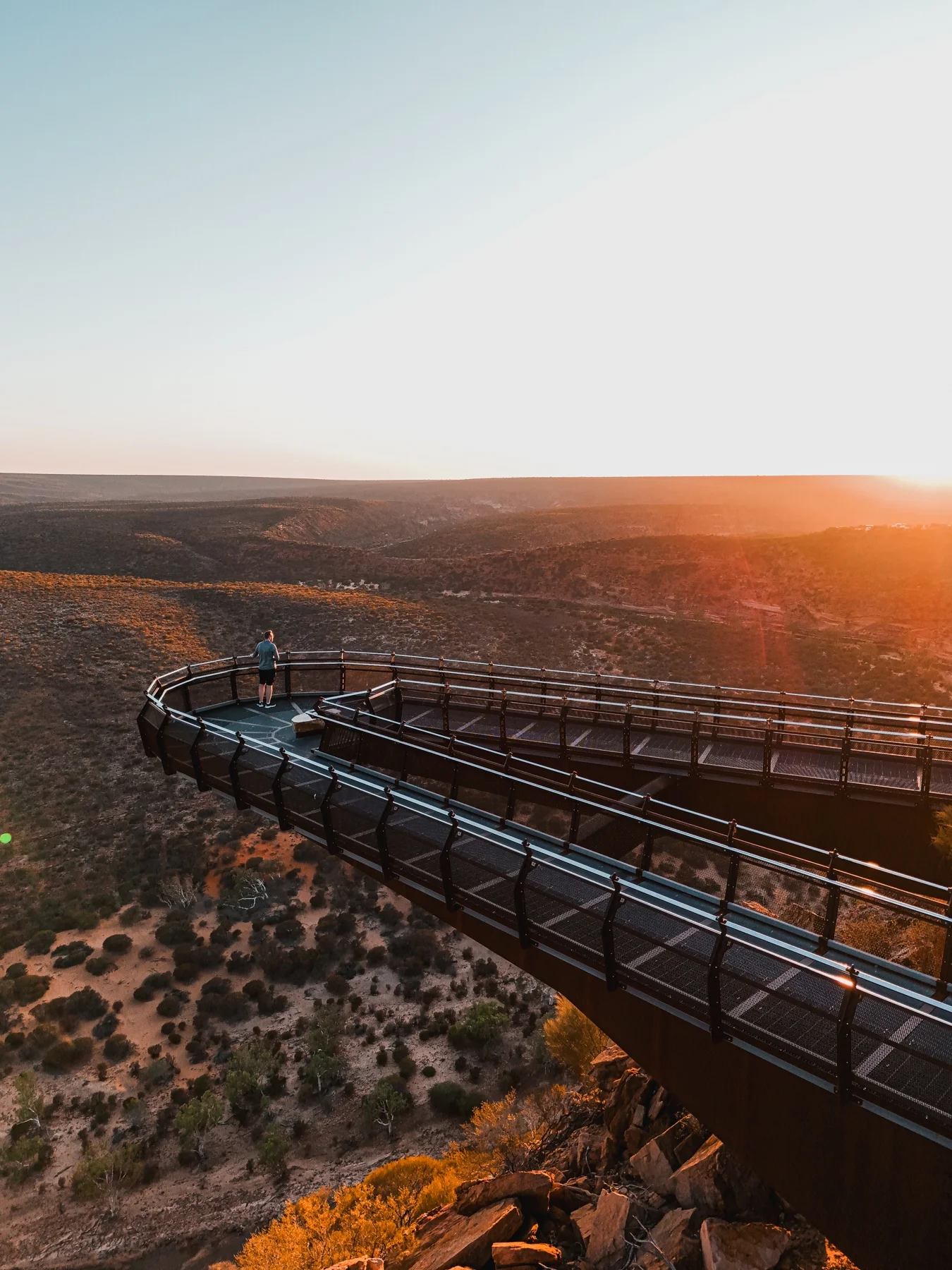
The Skywalk cantilevers one hundred metres above the Murchison River gorge, positioning observers three hundred and thirty kilometres north of Perth's light dome and sixty kilometres inland from Kalbarri township. At this latitude — twenty-seven degrees south — the Milky Way's galactic core transits directly overhead between April and October, revealing structural detail invisible from urban centres. The conservation fee of seventeen Australian dollars per vehicle grants day access to the park; stargazing tours operate independently under commercial licence.
Astronomers began documenting the region's sky quality in 2019, logging naked-eye magnitude limits above 6.8 on moonless nights. That threshold permits observation of the Eta Carinae Nebula's dust lanes without optical aid, a benchmark typically requiring coastal observers to travel eight hundred kilometres inland. The Skywalk's elevation — two hundred and fifty metres above the river bend — positions participants above the thin moisture layer that settles in the gorge after sunset, reducing atmospheric scatter. Kalbarri astronomy stargazing tours deploy Dobsonian reflector telescopes with apertures between ten and fourteen inches, resolving Saturn's Cassini Division and Jupiter's Great Red Spot under median seeing conditions.
The park's geology contributes to thermal stability after dark. Tumblagooda Sandstone, deposited four hundred and twenty million years ago during the Silurian period, releases absorbed heat gradually through the night, minimising convective turbulence that degrades telescopic images. Summer temperatures can exceed thirty-eight degrees Celsius by day, but the dry continental air permits rapid radiative cooling once the sun sets. Visitors asking is Kalbarri worth visiting for astronomy cite the combination of accessible infrastructure and genuine dark-sky conditions as rare within a half-day's drive of a capital city. The Skywalk opened in August 2020, designed by structural engineers to cantilever without internal lighting that would compromise night vision. Kalbarri skywalk sundowner and stargazing tour offerings combine twilight observation of the gorge with full-dark sessions targeting deep-sky objects. Unlike scenarios where observers ask can you see stars with a telescope in the city, sky conditions for stargazing here approach the theoretical limit for mid-latitude coastal zones. The galactic plane arcs from horizon to horizon, and the Magellanic Clouds — satellite galaxies visible only from the Southern Hemisphere — appear as distinct smudges low in the southern quadrant.
"Kalbarri holds Bortle Class 2 darkness, a designation shared by fewer than eight percent of surveyed sites across the Australian continent."
A step-by-step walkthrough of Kalbarri Stargazing tickets — what you'll see, how long each stage takes, and the details that matter.
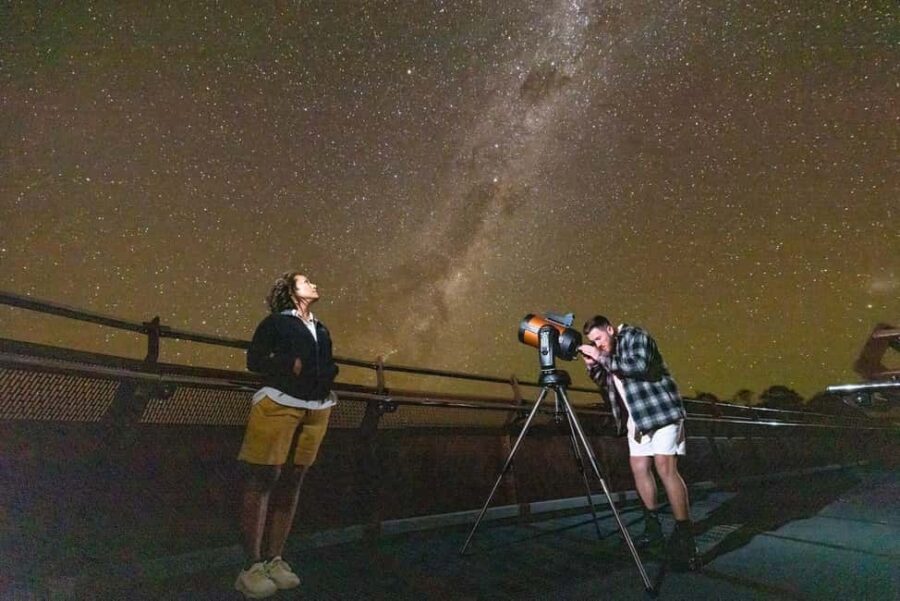
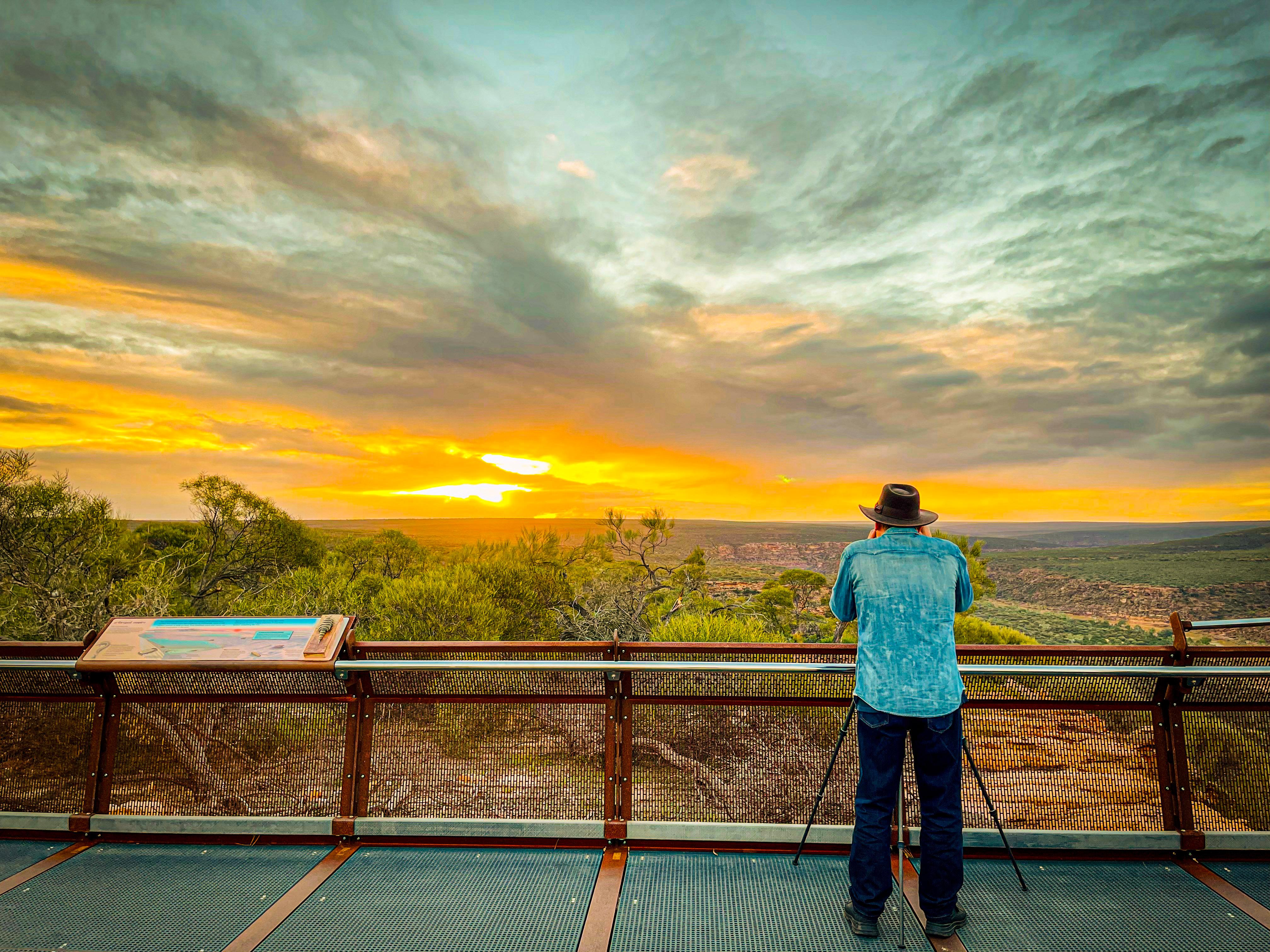
You arrive ninety minutes before astronomical twilight ends, while the western horizon still glows burnt orange above the gorge. The guide sets two Dobsonian telescopes on the Skywalk deck, aligning their altitude bearings.
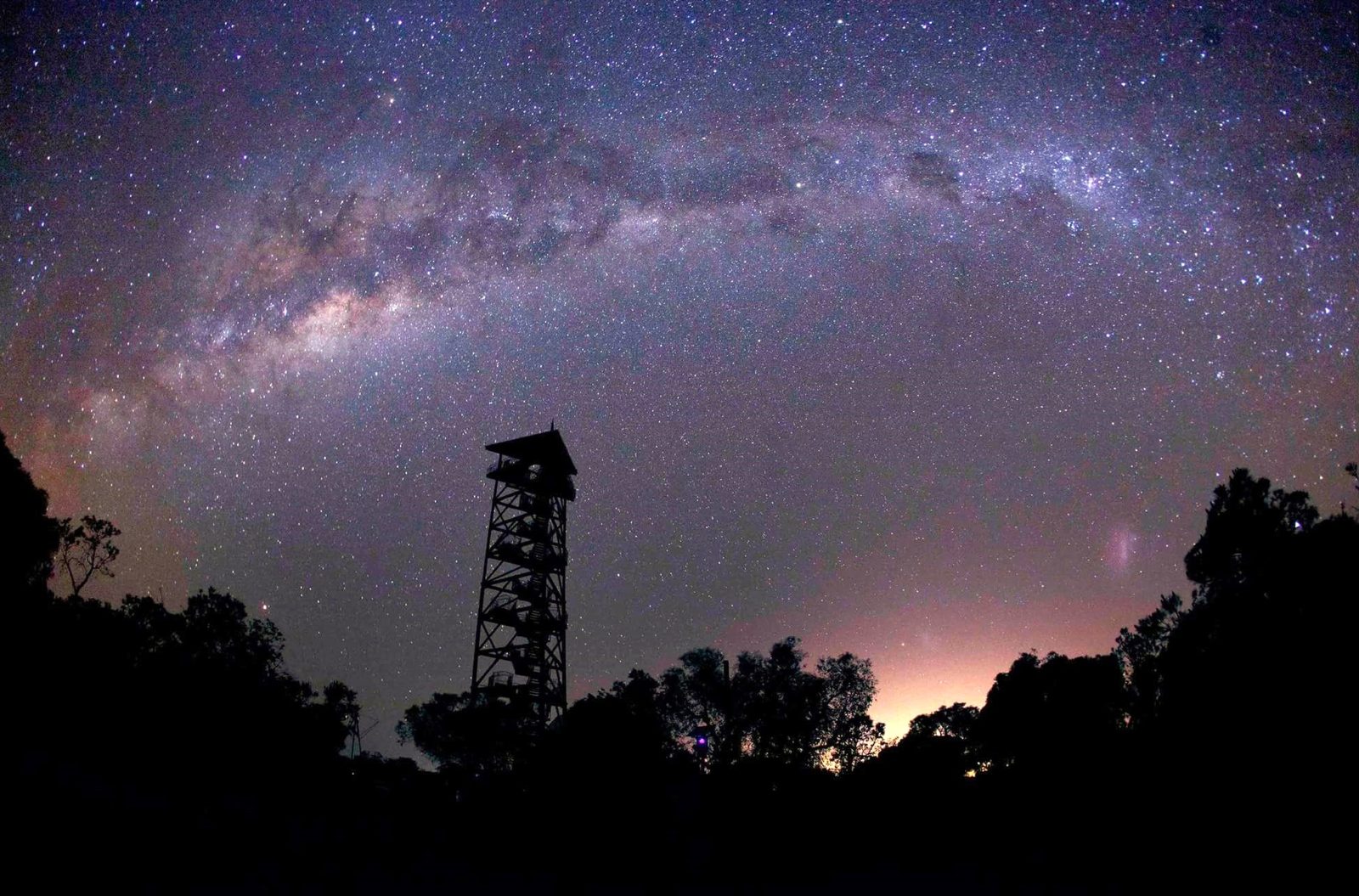
You watch Venus sink toward the ridgeline, bright enough to cast faint shadows on the sandstone rail. As full darkness settles, the Milky Way emerges overhead — not the pale smudge familiar from suburban skies, but a river of light dense enough to read structural lanes.
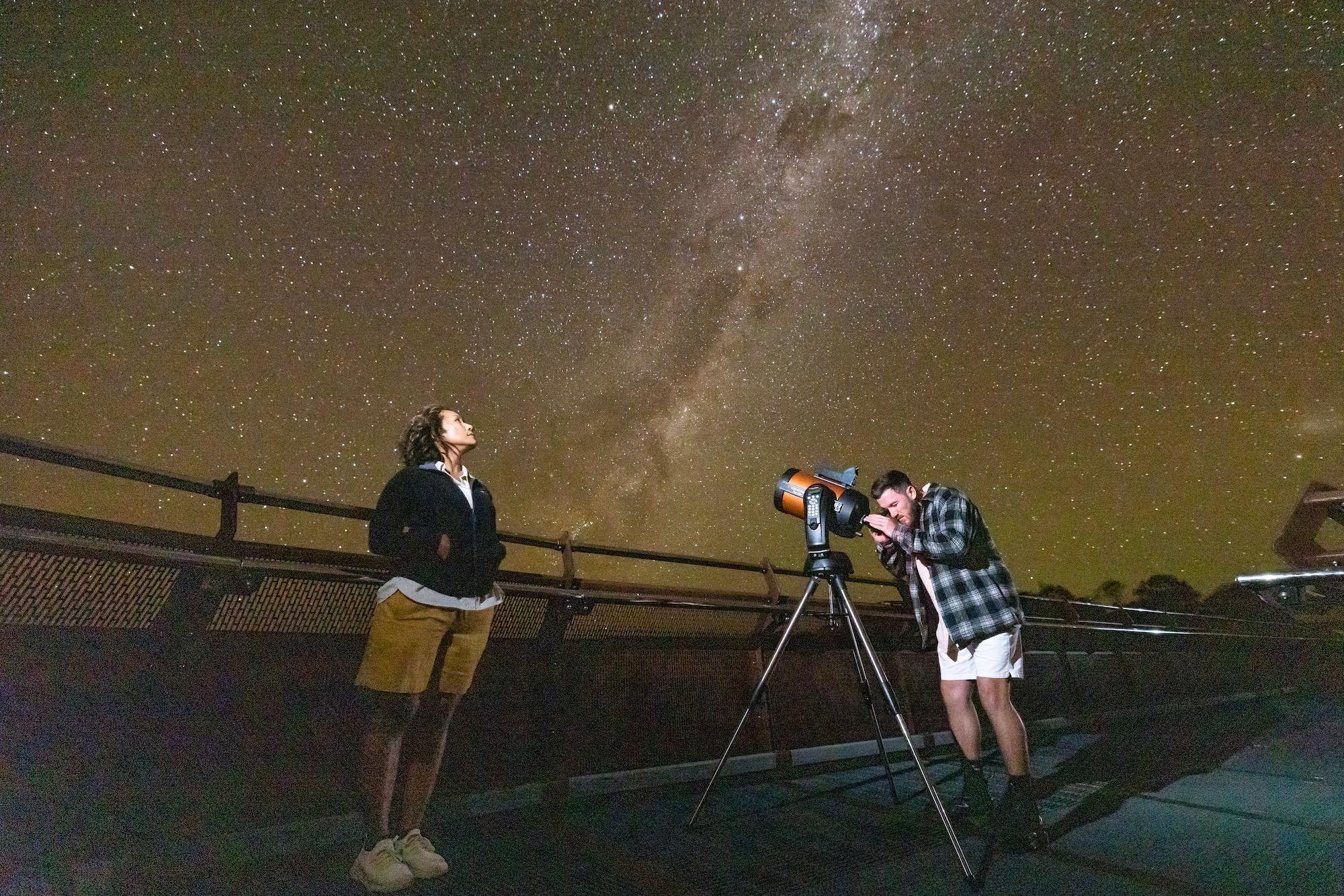
The guide centres Saturn in the eyepiece. You lean in and the planet snaps into focus: a golden disc banded with ochre, the rings tipped at twenty-three degrees, Titan a steady point to the east. The guide rotates the mount and Jupiter fills the field, its equatorial belts sharp against cream-white clouds. You count four Galilean moons strung in a line. Between telescope sessions, you lie back on the deck and let your eyes adapt. The guide traces Scorpius with a green laser, following the curve down to the galactic core. You notice the Coal Sack Nebula as an absence — a black void where stars should be. The Eta Carinae complex gleams above the southern rail, a knot of red and blue against the luminous band. The guide asks if you want to see the Omega Centauri cluster. You return to the eyepiece and find it: a sphere of ancient stars, dense at the core, spilling outward like salt on black glass.
The Kalbarri Skywalk is open 00:00–23:59, allowing for a night-time kalbarri stargazing tour. No specific park operating hours restrict your night visit.
Yes, the path to the Kalbarri Skywalk is designed for accessibility. It provides a stable viewing platform for your kalbarri stargazing tour.
The entrance fee is 17 AUD (conservation fee, per vehicle per day). This applies to all visitors accessing the Kalbarri Skywalk area.
Yes, photography is encouraged during your kalbarri stargazing tour. Ensure your gear does not block pathways for others visiting the Kalbarri Skywalk.
Arrival between 06:00–10:00 is recommended for general exploration, but stay late for the best night-time kalbarri stargazing tour conditions.
No, pets are not allowed in the national park. Please leave them behind to avoid any issues with your kalbarri stargazing tour.
There are basic facilities available in the park, but check their status at the Kalbarri Skywalk site. Always bring what you need for a kalbarri stargazing tour.
No, the park remains accessible 00:00–23:59. You can visit the Kalbarri Skywalk at any time to enjoy the dark skies.
Visitors typically spend 1-2 hours at the Kalbarri Skywalk during the day. Plan extra time for a thorough kalbarri stargazing tour.
A kalbarri stargazing tour is a fantastic way to see the Milky Way away from city lights. The Kalbarri Skywalk provides a unique vantage point for observing the stars.