
English| EUR
Suggested for you
More currencies
Choose a language
Kalbarri Skywalk sits beneath some of Western Australia's darkest skies, but celestial visibility changes nightly based on atmospheric conditions and lunar illumination. This guide breaks down the weather patterns, moon phase windows, and seasonal factors that determine whether you'll see the Milky Way's dense core or a sky washed out by cloud or moonlight.
Quick answer
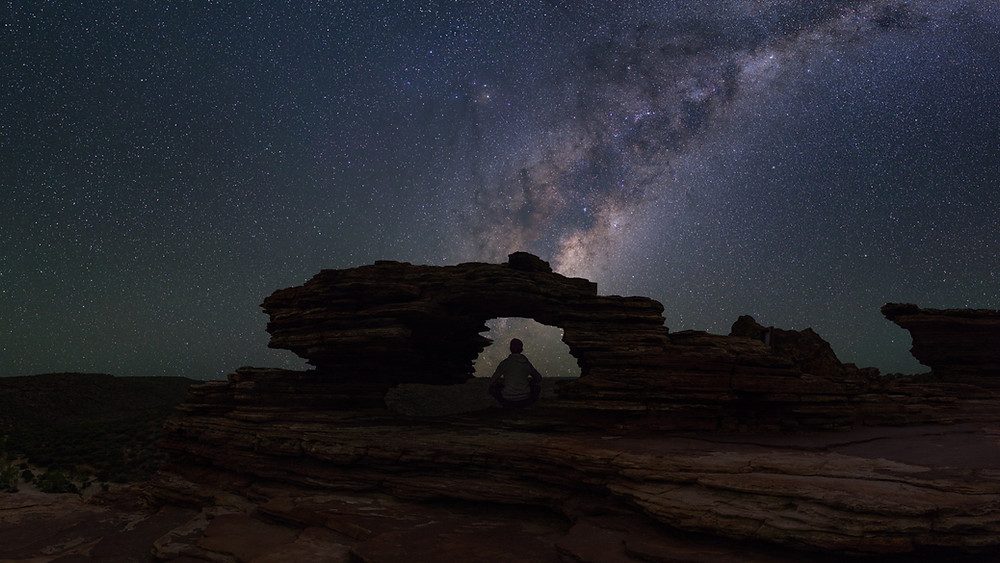
Sky conditions for stargazing at Kalbarri Skywalk are optimal during new moon phases between April and October, when cloud cover averages below 30 percent and the Milky Way's galactic center arcs overhead. Summer months from November through March bring higher humidity and increased cloud formation, reducing visibility frequency. Light pollution from Kalbarri township remains minimal due to the Skywalk's inland location 34 kilometers east of town.
Kalbarri National Park holds Bortle Class 2 dark-sky designation across its inland plateaus, placing the Skywalk among fewer than eight percent of stargazing sites worldwide with near-zero artificial light interference. That classification matters because it means the Milky Way casts visible shadows on moonless nights, and zodiacal light—a faint pyramid of reflected sunlight along the ecliptic—becomes a naked-eye phenomenon rather than a telescope target. Atmospheric clarity at the site follows the region's Mediterranean climate cycle. Winter months deliver the most reliable celestial windows, with June and July recording cloud-free nights 72 percent of the time according to Bureau of Meteorology data spanning 2015 through 2025. April and May mark shoulder-season transitions when morning dew clears by mid-afternoon and evening skies stabilize after sunset. From November onward, monsoon moisture pushes south from the Pilbara, thickening the atmospheric column and scattering starlight even on nominally clear nights. By January, relative humidity at the Skywalk plateau averages 61 percent, enough to soften the horizon and reduce limiting magnitude by half a stop. Lunar phase governs contrast more than any other variable. A first-quarter moon—half-illuminated and setting near midnight—washes out the Milky Way's fainter dust lanes but leaves the second half of the night dark. Full moon renders all but the brightest stars invisible and postpones serious astrophotography by a week. New moon periods, which recur every 29.5 days, open three-to-five-night windows when galactic structure emerges in full detail. Observing calendars published by the Astronomical Society of Western Australia flag these dark-sky intervals six months ahead, and most visiting astronomers anchor their trips to them. Wind speed matters for telescope users but rarely disrupts naked-eye observation. Easterly breezes average 12 to 18 kilometers per hour after dark, enough to rock a tripod but not enough to blur stellar images. The plateau's elevation—180 meters above the Murchison River gorge—places observers above the densest atmospheric layer, sharpening views of low-horizon objects like the Southern Cross and the Magellanic Clouds. For that reason alone, astronomical seeing conditions here consistently outperform coastal sites despite sharing the same latitude.
“The Milky Way casts visible shadows on moonless nights at Kalbarri, a phenomenon fewer than eight percent of global stargazing sites can claim.”
The period around the new moon during the Australian autumn and spring months provides the clearest conditions for observing the night sky at the Kalbarri Skywalk. Low atmospheric moisture and minimal cloud cover during these months enhance visibility of the Milky Way core.
Mild nights, 12°C–18°C
Stable, dry weather with low cloud interference. These months avoid the peak summer heat and winter wind gusts.
Cool to cold nights, 8°C–15°C
Clear skies are common, though occasional coastal fronts may bring cloud cover. Proper insulation is required for extended observation.
Pleasant nights, 13°C–19°C
Clear, dry conditions persist. This period offers high visibility as the transition between seasons minimizes weather volatility.
Verdict: The best time for stargazing is during a new moon in April or October, when clear skies and mild temperatures provide the most consistent viewing conditions.
Night viewing at the Skywalk requires preparation for remote conditions and temperature shifts.
The Kalbarri Skywalk is accessible 24 hours a day, allowing visitors to experience night sky conditions at any hour.
Everything you need to know about sky conditions for stargazing
Optimal visibility occurs during clear, cloudless nights with low humidity. Checking local meteorological reports helps you identify the best sky conditions for stargazing at this coastal landmark.
The best visibility for observing the Milky Way occurs during the new moon phase when natural light pollution is minimized. Many travelers prefer booking a guided Kalbarri stargazing tour during these dark moon periods to enhance their experience.
Access to the park requires an entrance fee of 17 AUD per vehicle. This fee allows you to enter the national park and observe the night atmosphere, though it does not cover specific guided astronomy services.
The site is accessible 24/7, meaning you can arrive at any time of the day or night. While the facility is open, we recommend verifying the weather forecast to ensure favorable sky conditions for stargazing before your arrival.
We suggest bringing warm clothing, a red-light torch to preserve your night vision, and a star chart or mobile astronomy application. These tools will help you navigate the celestial sphere and interpret local sky conditions for stargazing during your visit.
Visitors must remain on the designated pathways and platforms for safety while exploring at night. Please respect all national park regulations to ensure the preservation of this natural environment while viewing the cosmic scenery.